
- The Leyenda Convention has grown over 13 years from a selective, 24-participant classical guitar institute into a major international gathering targeting 225 attendees.
- Expanded event bridges multiple styles and genres, featuring classical guitar training from the legendary Romero family, jazz guitar via the Charlie Christian Institute, flamenco dance, educator professional development, and free youth community outreach.
- Convention acts as an international arts incubator designed to foster spontaneous collaboration between world-class masters and emerging creators.
BY ROD JONES
OCU MARKETING & COMMUNICATIONS
When you think of the guitar performance hotspots of the world, you might list locales like Nashville, Memphis, Los Angeles and New York, or international destinations like Spain, England and Germany.
Thanks to the work of Ä¢¹½TV music professor Matt Denman, the home of the Stars is building a reputation as one of the up-and-coming destinations for guitar performance and education. That’s largely due to the annual , a multi-faceted convergence of music and artistry led by Denman.
The convention, which has been evolving and growing at OCU for the past 13 years, has turned the campus into a vibrant "living room" for musicians from across the globe.
“We wanted to create a forum for artistic and philosophical conversations, where everyone in the audience can take part and benefit from them,� Denman said.
The evolution of the Leyenda Convention has been driven by a vision to maximize artistic impact, he added. Its roots trace back to the Quartz Mountain Music Festival in 2009. The event started as a tribute to Celedonio Romero — the late Spanish patriarch of the legendary Romero guitar family — and was called the Romero Guitar Institute. Denman, now the convention’s director, was a student at that first event.
Denman went on to become a high school guitar teacher, building a nationally recognized guitar program at Classen School of Advanced Studies. In 2011, Pepe Romero, part of what has been dubbed the “Royal Family of the Guitar,� asked Denman to take over the institute.
Denman brought the program to the OCU campus in 2013, the first year he joined the faculty. For years, the weeklong program maintained a small and highly selective focus, with a maximum of 24 participants. While the quality was undeniable, Denman said he desired a wider impact, prompting the creation of the more expansive event under the Leyenda Foundation umbrella.
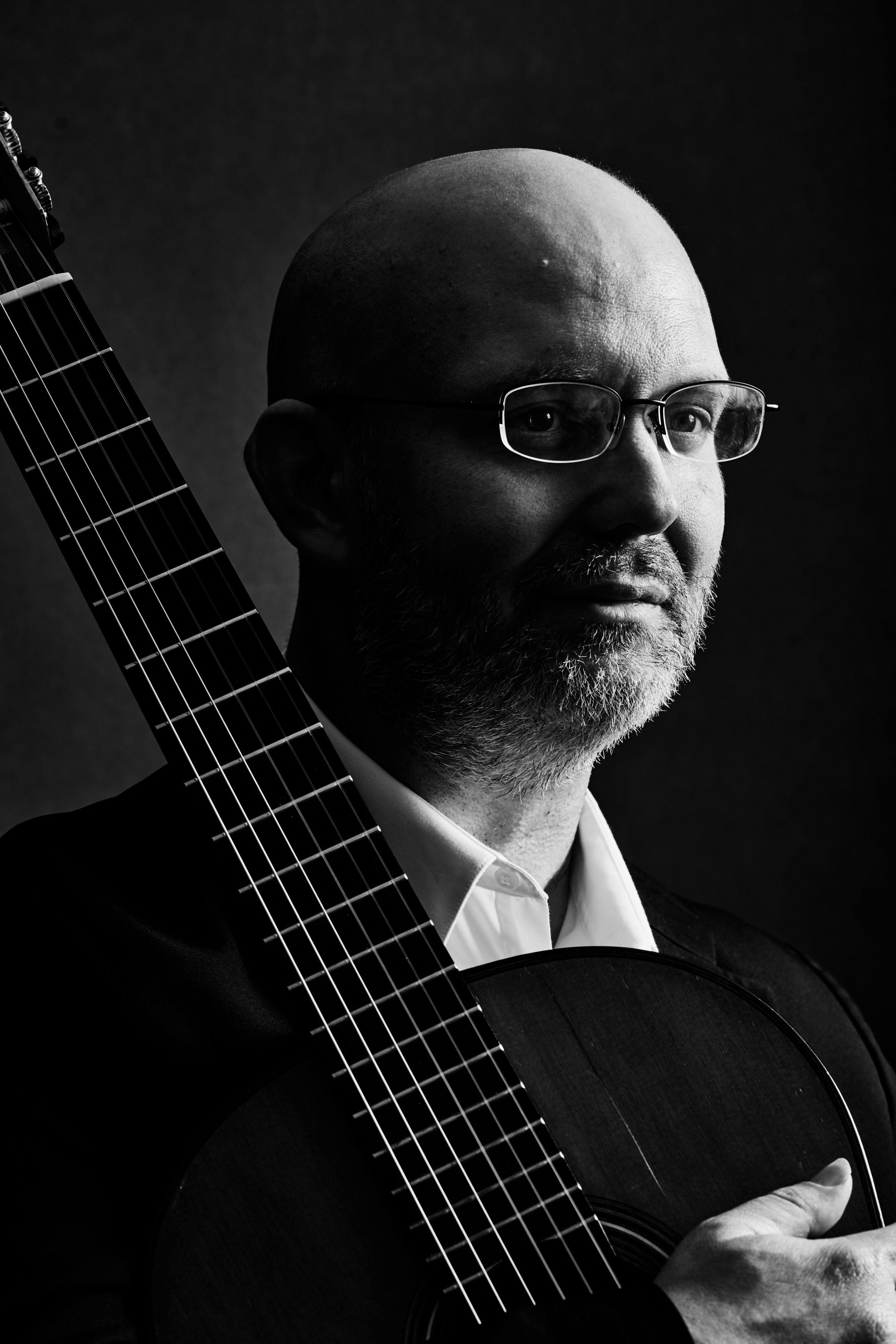
"The vision was to have all of these things swirling around at the same time so everybody could participate in all manner of things, including non-guitar components," Denman said.
Denman is targeting 225 registrants for this year’s event, anticipating that a new flamenco dance component will help the convention grow even further. The convention is set for June 29 to July 2, with the Romero Guitar Institute continuing through July 7.
Expanding artistry
The 2025 version of the convention successfully merged several forms of artistry simultaneously, creating a cross-pollinating, synergistic environment. The number of registrants took a massive leap from the previous cap of 24 up to 160 attendees. Denman eyes another leap in registration for the 2026 edition through its returning components and some additional features:
- The Romero Guitar Institute: The original program focused on classical guitar, continuing its tradition of attracting elite performers.
- The Charlie Christian Jazz Guitar Institute: Honoring Oklahoma City native Charlie Christian, a legendary figure in jazz history. Christian, who attended Douglas High School with famed writer Ralph Ellison (who wrote about Christian building his first guitar), was discovered locally before joining Benny Goodman’s band. This institute brings in top talent like Grammy Award-winning jazz guitarist Mark Whitfield and Nashville studio musician Chip Henderson, in partnership with the Black Liberated Arts Center.
- Come Together: This component serves as a professional development program for guitar teachers of all styles, drawing educators from across the country.
- Leyenda Spark: This program offers free educational opportunities for students ages 12 to 18, primarily targeting those in Oklahoma City Public Schools. Participants and scholarship recipients from around the world complete a required amount of community service by teaching the local Spark students. Last summer, 25 local students received three days of intensive, one-on-one lessons from award-winning guitarists.
- Flamenco dance: Featuring dancers from Spain and Albuquerque, New Mexico, this component seeks to create a performance connection to the guitar's history.
The student experience
Joycie Johnson, a music education major at OCU, has witnessed the evolution firsthand, having attended the event for three years. She is actively involved, performing in ensembles and working behind the scenes as part of the OCU Guitar Studio.
Johnson focused on the classical Romero Institute and the Come Together professional development sessions, which directly support her career goal of becoming an educator.
“Without a doubt, that was probably one of the biggest professional development opportunities I think I’ll have, especially for guitar,� Johnson said. “Over the years the event has only gotten bigger and bigger.�
She particularly values presentations on teaching students with special needs. For Johnson, the dramatic increase in participation created valuable networking opportunities.
“It is so fulfilling. You get to meet artists and players from all over,� she said. “The fact that it’s more accessible to everybody, like teachers and faculty, as well as students interested in playing, you get insight from so many different perspectives.�
Brandon Brown, assistant director for the Leyenda Foundation, has been involved with the Romero Guitar Institute since he was 12. His perspective bridges the student and administrative experience, noting the simultaneous growth in both quality and quantity.
Brown, who holds master's degrees in Guitar Performance and Nonprofit Arts Administration from OCU, helps Denman with year-round planning, including scheduling and contacting artists.
“Sometimes Matt likes to plan it even two years in advance for certain things. We’ve been adding new programs, or we’re trying to, every year,� Brown said.
Brown’s deepest personal connection remains with the classical guitar sessions and the Romeros themselves.
“I feel like I’m close with the Romeros, so seeing them every year is kind of like a check-up with them,� he added.
The most recent convention reached a "stratospheric level," Denman said, by partnering with the Oklahoma Chamber Symphony, led by OCU alum Kaleb Benda. This enabled several soloists to make their orchestral debut by performing movements of concertos, a rare opportunity for guitarists at any level.
A signature moment that captured the spirit of convergence came at the convention’s close, reflecting the historical friendship between classical guitarist Pepe Romero and the late jazz legend Joe Pass. Romero and jazz guitarist Mark Whitfield came together on stage to play a spontaneous duet.
The ‘living room’ vision
Pepe Romero remains the spiritual and artistic heart of the classical dimension of Denman’s work. Denman’s relationship with the Romero family began at the 2009 festival, where Pepe offered to take him “underneath his wing and guide my career,� a defining moment that shaped Denman’s artistic and educational trajectory.
Pepe’s early experiences cultivated a philosophical temperament and a uniquely multifaceted artistic identity, evident in the depth of his musicianship, his poetic sensibility and his visual work. One of his paintings is held in the collection of the Metropolitan Museum of Art in New York City.
A communal, cross-disciplinary “living room� culture surrounded the Romeros in Spain after the Spanish Civil War while they honed their craft, performing for each other and sharing ideas. That culture became a model for Denman’s own creative ambitions.
Denman’s long-term aspiration for the Leyenda Foundation, now celebrating its second anniversary, is to advance what he describes as a grand unified theory of the arts. It’s a vision rooted in that same spirit of shared artistry, conversation and community that defined the Romeros’ world.
“My long-term goal is that we can eventually encompass many different art forms happening at the same time, where specialization is encouraged but philosophical and artistic conversations are accessible to everyone,� Denman noted.
The convention is already expanding beyond guitar performance, like music composition and dance.
Registration prices vary depending on the program. And while concerts charge a modest admission fee, the foundation maintains a policy of not turning away those who want to attend. It’s part of the event’s mission of moving beyond a classical guitar institute to becoming an international arts incubator.
“We are an artist-first organization dedicated to building sustainable pathways across education, performance, recording and legacy preservation,� Denman said. “By bridging the gap between legendary masters and the next generation of creators, we ensure that the traditions of classical, jazz, flamenco and contemporary music do not just survive — they flourish.�
