by Rod Jones
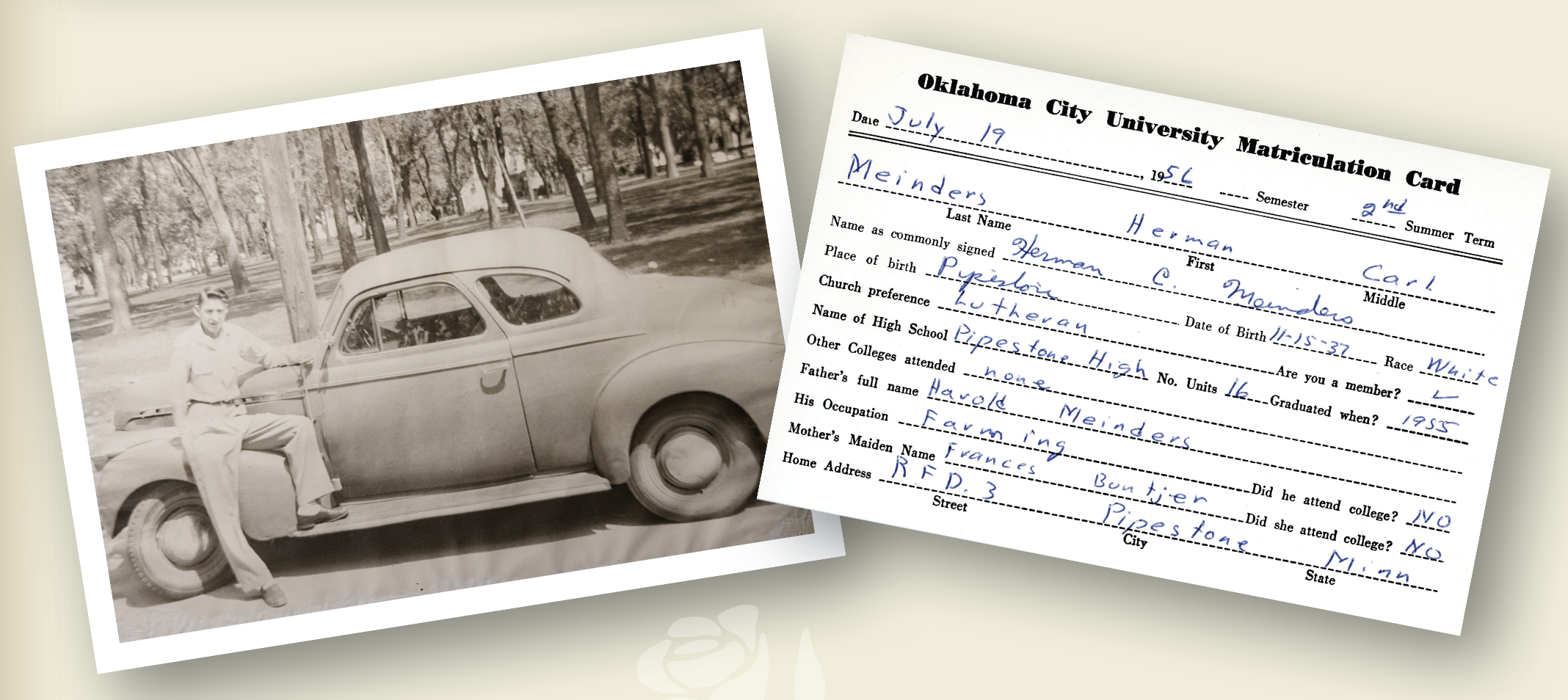
The farm boy from Pipestone, Minnesota, must have wondered what else could go wrong as he stared at the flat tire on his 1949 Studebaker on the side of the road. It was also the height of rush hour traffic in an unfamiliar midwestern city. With no spare tire or jack (both of which were stolen during a separate unfortunate event), and only 20 cents in his pocket, the young man walked to a filling station a block away to try to borrow what he’d need to make it to the first day at his new job as a flower directory salesperson.
Thus began the blooming career of Herman Meinders. Despite the ominous beginning, Meinders showed determination and grit to become one of the most successful entrepreneurs in the floral industry. He would later become better known for his selfless instincts and extreme generosity.
His passing on March 30, 2025, marks the end of a remarkable life, a classic American journey from farm boy to titan of industry and, finally, to one of Oklahoma’s most impactful philanthropists. His determination, born from a desire to be a “proper businessman� and escape the chores of his parents’ farm, was the engine that powered his future.
From student to salesman to empire
With many of his friends off to college, one of his former high school buddies encouraged Meinders to consider joining him at OCU. Meinders knew he would need to hold down a job while attending college, and the university had a reputation for accommodating working students. Besides, he was eager to escape the frigid northern winters and live in a warmer climate.
Following a brief visit, accompanied by his father, Meinders decided to take the leap and became an OCU student. He took early morning business classes so he could hold a job at a JCPenney store. He joined the Lamda Chi fraternity and made many friends.
Meinders wasn’t pleased with his academic performance after his first year in college. The friend who convinced him to attend OCU had transferred to a university in Florida. Meinders decided to follow him there to an even warmer climate.
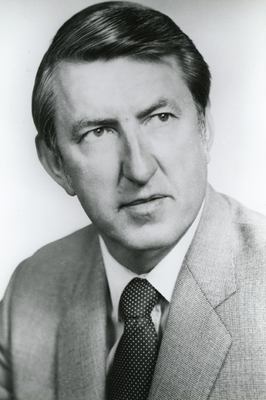
Meinders’ path was set when, during a brief and fizzling bar ownership venture, he met a traveling floral directory salesman who inspired him to join the industry. For nearly a decade, Meinders crisscrossed the country, logging thousands of miles a year to become one of the most successful floral directory salesmen in the country.
His deep understanding of the industry, along with some clever marketing ideas, led to his ultimate venture. In 1970, with a stellar reputation for integrity and honesty (his word was practically as reliable as a written contract) Meinders founded American Floral Services in a tiny garage apartment mere blocks away from his former OCU campus home.
AFS would rewrite the rules of the floral industry. Meinders and his team introduced innovations such as no-charge order sending, a teletype communications system called Info-Com, and a rebate system for wire orders. His strategic vision, organizational discipline and relentless work transformed AFS into the fastest-growing floral wire service in the world by the mid-1980s, eventually becoming the largest through its sale and merger with Teleflora in 2000. His financial success was hard-won, a platform built not for personal enrichment alone, but for a greater purpose.
The ultimate partnership
Fittingly, his first major undertaking as an OCU benefactor was a landscape improvements project around the visual arts building in 1985. He met with then-alumni relations director LaDonna Kramer in the president’s office to discuss the plans.
Both had been students at OCU in the mid-1950s, although they didn’t know each other then. In college, LaDonna was a promising pianist and a future Miss Oklahoma.
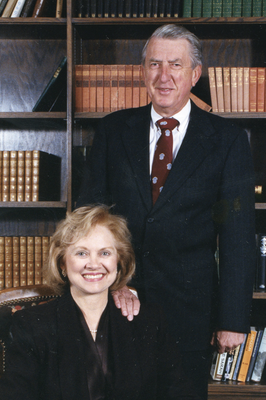
The two became more acquainted when Kramer wrote a story about Meinders for Focus magazine. A courtship followed, and in 1986 the two were married in the Bishop W. Angie Smith Chapel on campus. Their relationship blossomed into the most prolific philanthropic partnership the university has ever known.
Their joint commitment to OCU has been immense, with total contributions of more than $70 million. Their philanthropy reshaped the campus landscape and secured its future. Key gifts included:
• The Meinders School of Business, dedicated in 2004, a project championed by Herman with an initial gift of $18 million.
• The Kramer School of Nursing, named for LaDonna’s parents after the Meinders retired the debt on the original building. They later supported the construction of the current modern facility and renovations to the original building to create the Meinders Simulation Center.
• Numerous scholarships helping thousands of students, many of whom would simply not have been able to attend OCU without their assistance.
The Meinders’ joint commitment to OCU was more than just a financial transaction. Longtime friend Cathy Leichter highlighted their active involvement.
“They both had a strong sense of spirituality, and they showed it graciously,� Leichter said. “They believed that having spirituality is a good thing, but if you don’t put it into action, you have nothing.�
Their financial generosity was mirrored in the time they spent in nurturing relationships with students and the campus community. Herman Meinders served on the OCU Board of Trustees, sharing his business expertise and supporting the university’s leadership. He summarized his philosophy simply: “I’ve been very blessed in my life, and I think the more I give, the more I receive.�
Leichter discussed how she and her late husband, Kurt, had common interests with the Meinders and became “instant friends.� The husbands were both self-made success stories and often talked about business and shared an analytical approach to giving. They took extra care in reviewing proposals and financial statements to ensure their gifts would have the most possible impact.
“They were generous in spirit, encouragement and gratitude. They maintained their relationships with the administrations as years went by, thinking of new ways they could help,� Leichter added.
She noted that although LaDonna is most remembered for her support of nursing, as a musician she also loved to find ways to help the music school.
“Her heart was nurtured during her time as a young piano teacher in Kingfisher where she grew up. She stayed connected with many of her students years later and provided some of them with scholarships so they could pursue their dreams,� Leichter said.
A legacy beyond campus
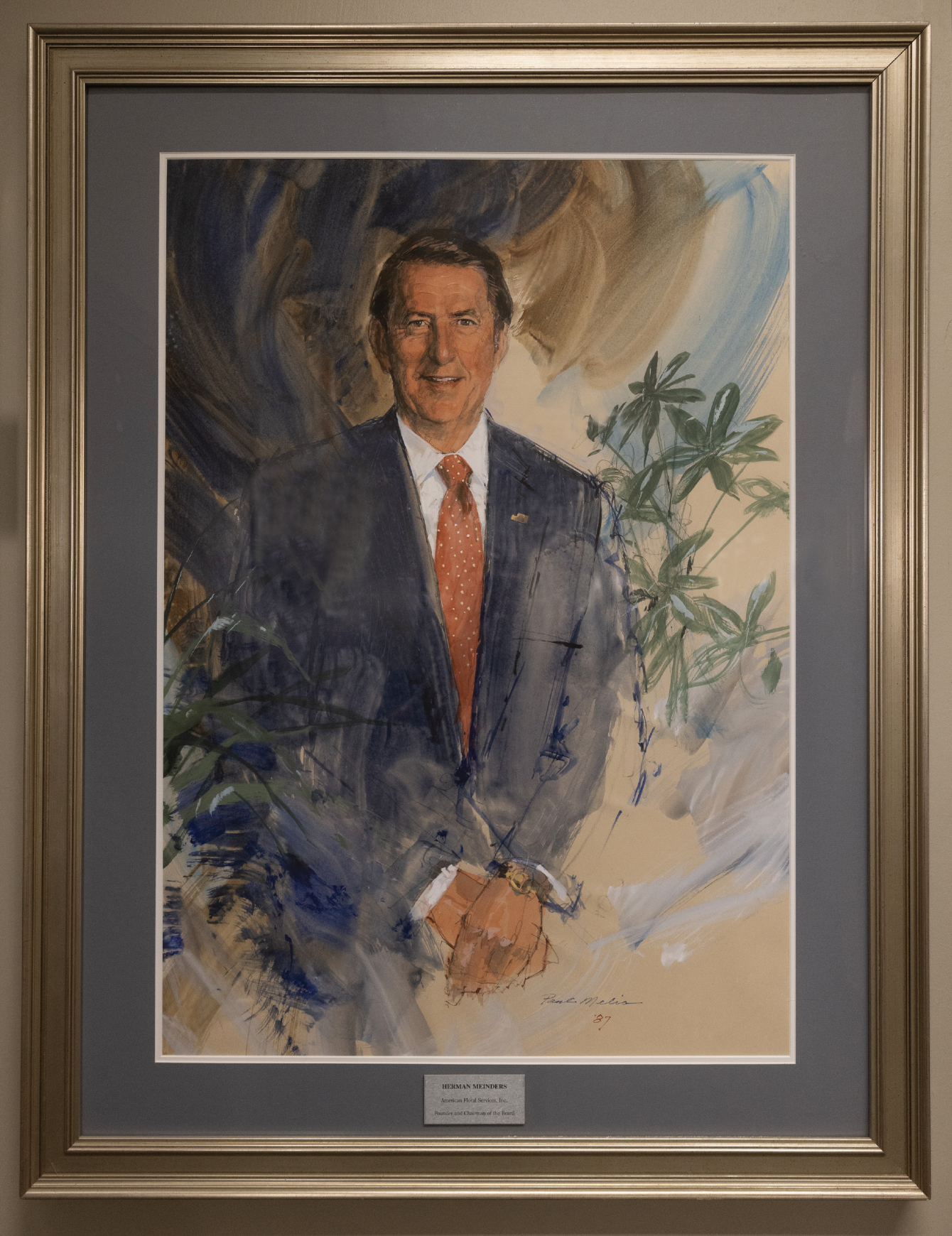
Meinders’ reputation was characterized by taking the initiative and often approaching institutions to ask how he could help, frequently providing well beyond what was asked. Following the sale of AFS, he and LaDonna established The Meinders Foundation, purposefully shifting resources from commerce to charity with a clear focus on creating a lasting impact on the community.
While education was paramount, Meinders’ footprint is visible across the entire cultural and civic fabric of Oklahoma City. A few of their many contributions to causes off campus include:
• Health care: Significant support for health systems, especially the Mercy Health System, to establish institutes for digestive health and neuroscience.
• Arts and civic life: Funding for the Meinders Hall of Mirrors at the Civic Center and the Meinders Gardens in downtown Oklahoma City, and crucial support for institutions like the National Cowboy & Western Heritage Museum and the Oklahoma City Museum of Art.
• Community: Contributions to literacy centers, the Oklahoma City Zoo, and various church and youth-related projects.
From a young man with a broken-down car and an unbreakable will, Meinders proved that success in the American dream is not an end in itself. His life was a journey of turning “flowers to philanthropy,� leaving behind not just a global business, but a bedrock of institutions and opportunities that will strengthen Oklahoma for centuries. It is a legacy of generosity, humility and kindness that will continue to bloom.
